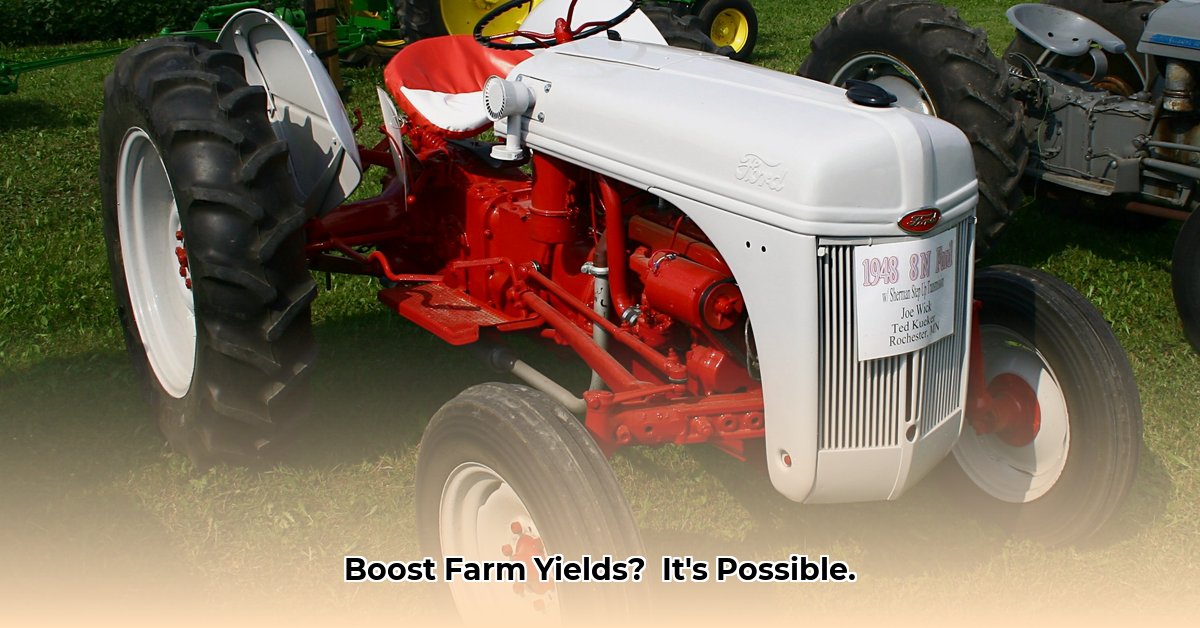
Choosing Your Ford Tractor: The Perfect Match
Selecting the right Ford tractor is paramount for efficient and sustainable farming. Consider your farm's size, crop types, and terrain. A small-scale operation needs a maneuverable tractor, unlike a large-scale farm requiring greater horsepower. Key features to examine include:
- Horsepower (HP): Indicates the tractor's power for pulling implements (tools attached to the tractor). Higher HP handles heavier tasks.
- Three-Point Hitch: A system for attaching and detaching implements, offering versatility.
- PTO (Power Take-Off): Transmits power from the engine to run powered implements, essential for various farming tasks.
- Ground Clearance: Important for navigating uneven terrain.
For optimal implement selection, check out these tractor plows. Consult your local Ford dealership for personalized recommendations. Online resources further aid in comparing specifications and reading reviews. Remember, the right tractor maximizes efficiency and minimizes environmental impact. Don't you want the best tools for the job?
Precision Farming: Farming Smarter, Not Harder
Precision farming, utilizing GPS-guided implements (if your Ford tractor model supports it), optimizes resource use. It allows for targeted application of fertilizers and pesticides, minimizing waste and maximizing efficiency. This translates directly to cost savings and reduced environmental impact. Does that sound appealing?
Step-by-Step Guide:
- Invest in Compatible Technology: Source GPS-compatible software for your specific Ford tractor model.
- Create Detailed Field Maps: Utilize GPS technology to generate precise maps of your fields, identifying areas requiring varying attention.
- Program Tractor Settings: Input application rates and designated paths according to the field maps.
- Monitor and Adapt: Closely track your results. Precision farming is an iterative process; refinement is key to long-term success.
This approach minimizes input waste, maximizing your return on investment (ROI) while reducing your environmental footprint. It's a smarter way to farm, yielding both economic and environmental benefits.
Fuel Efficiency: Saving Money and the Planet
Fuel costs significantly impact profitability. Optimizing fuel efficiency is crucial for sustainable farming. Here are actionable strategies:
- Regular Maintenance: Preventative maintenance ensures optimal performance and fuel efficiency, preventing costly repairs.
- Proper Tire Inflation: Correct tire pressure reduces rolling resistance, leading to better fuel economy.
- Efficient Operation: Minimize idling and plan routes effectively to reduce fuel waste.
These straightforward steps lead to substantial savings and a smaller carbon footprint. It pays to be proactive! Think of it as an investment in both your financial future and the planet's health.
Soil Conservation and Water Stewardship: Healthy Soil, Healthy Planet
Soil health is paramount for sustainable agriculture. Your Ford tractor, with appropriate attachments, becomes a tool for soil conservation and water management.
| Technique | Description | Benefits |
|---|---|---|
| No-Till Farming | Planting seeds without plowing. | Reduces erosion, improves soil structure, conserves moisture. |
| Cover Cropping | Planting crops to improve soil health, not for harvest. | Prevents erosion, enhances fertility, suppresses weeds. |
| Precision Irrigation | Utilizing technology for targeted water delivery. | Conserves water, optimizes water use efficiency. |
| Crop Rotation | Alternating different crops in a field over time. | Improves soil health, reduces pest and disease pressure, increases biodiversity. |
These practices, often facilitated by your Ford tractor, minimize soil erosion and optimize water usage. These strategies contribute to both the financial and ecological health of your farm.
Maintenance: A Long-Term Investment in Sustainability
Regular maintenance extends your Ford tractor's lifespan, reducing the environmental impact of future replacements. Consider this preventative care, preventing costly repairs and reducing waste. It is a sustainable practice that benefits your bottom line and the environment.
Resources
Further research into sustainable farming practices and government support programs is encouraged. Your local agricultural extension service and online resources from organizations supporting sustainable agriculture are invaluable.
This guide provides a foundation for utilizing Ford tractors in sustainable farming. Remember, consistent effort and innovation are key to maximizing yields while minimizing environmental impact. With the right tools and strategies, you can build a successful and sustainable farm.